A1
Entrepreneurial Action & Inaction
Why intention so often fails to convert into founding behavior — and the consequences of stalling for venture outcomes.
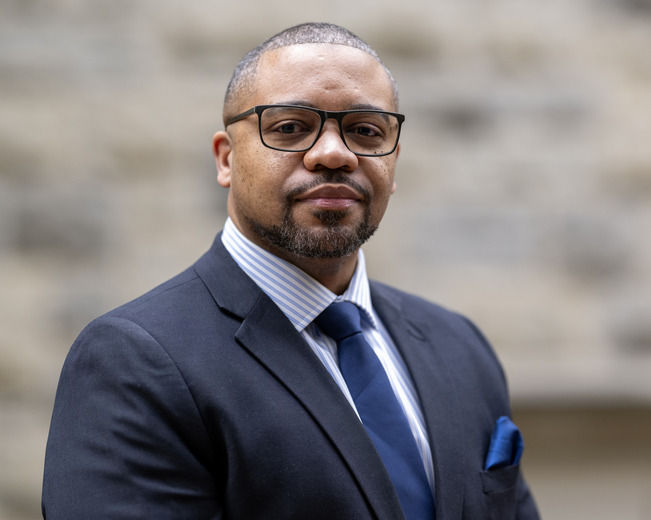
I'm Trey Lewis. My research follows entrepreneurs through the new venture creation process to answer a deceptively simple question: why do so many people who fully intend to build something fail to take the requisite action to do so — and what changes when the context is stacked against them?
I also study how entrepreneurial firms overcome brand deficits to successfully recruit early employees.
Each program is a different angle on the same concern: turning the capacity to act into action, especially where structure makes acting harder.
Why intention so often fails to convert into founding behavior — and the consequences of stalling for venture outcomes.
Stage-based models of new-venture creation and the idea that when a founder acts matters as much as whether they do.
A multilevel account of how racialized context, legitimacy, and resource access constrain agency across the business venturing lifecycle.
How nascent ventures attract talent, and how signals like passion and gender composition shape who is willing to join.
Articles in the field's leading management and entrepreneurship journals.
Lewis, T., Hunt, R. A., Murphy, M. J., & Townsend, D. M.
Journal of Business Venturing, 41(1), 106547.
Frid, C. J., & Lewis, T.
Entrepreneur & Innovation Exchange, February 27, 2026. Retrieved July 27, 2026, from https://eiexchange.com/content/Black-founders-face-high-stakes-decisions-too-early
Lewis, T., Hunt, R.A., Townsend, D., & Murphy, M. J.
Entrepreneur & Innovation Exchange, February 11, 2026. Retrieved July 27, 2026, from https://eiexchange.com/content/motivation-isnt-the-problem-in-black-entrepreneurship
Lewis, T., Hechavarría, D. M., Williams, D. W., & Cardon, M. S.
Journal of Business Venturing, 39(1), 106344.
Engel, Y., Lewis, T., Cardon, M. S., & Hentschel, T.
Academy of Management Journal, 66(5), 1469–1500.
Lewis, T., & Cardon, M. S.
Journal of Business Venturing Insights, 14, e00193.
Awards recognizing scholarly contribution, teaching, and a sustained commitment to inclusion.
Awarded a $20,000 research grant by the Center for Black Entrepreneurship (anchored by Spelman & Morehouse Colleges, Atlanta) to study Black-founded unicorn firms.
Virginia Tech — Department of Management.
College-wide award for demonstrated, active commitment to inclusion and diversity — Pamplin College of Business.
Virginia Tech — Department of Management.
I teach the same thing I study: how to move from understanding an opportunity to actually building toward it. My courses are discussion-driven and built around real-world application.
Average instructor rating overall
The mindset, skills, and judgment to turn a raw idea into a real venture — spotting genuine opportunities, pressure-testing them against the market, and taking the first concrete steps toward launch.
Developing cross-functional management competency — how firms build competitive advantage and the strategic decisions required to sustain it.
Opportunity identification, value-proposition development, customer and market research, and feasibility analysis — the full front end of the venturing process.
My research keeps arriving at the same finding: founders rarely stall for lack of ideas or ambition. They stall because the earliest resources — a little capital, a credible introduction, someone who believes the venture is real — are exactly what under-resourced and Black entrepreneurs are least likely to have when it matters most.
I am building First Circle Fund to put a thumb on that scale. It's a platform aimed at the very first circle of support around a founder — the small, early backing and relationships that determine whether someone moves from intention to action at all. It is where the questions I ask in journals become something founders can actually use.
"Raising your first dollars from family and friends usually means a run of awkward conversations.
I'm building First Circle Fund to turn that informal ask into something formal — with structure and dignity."